
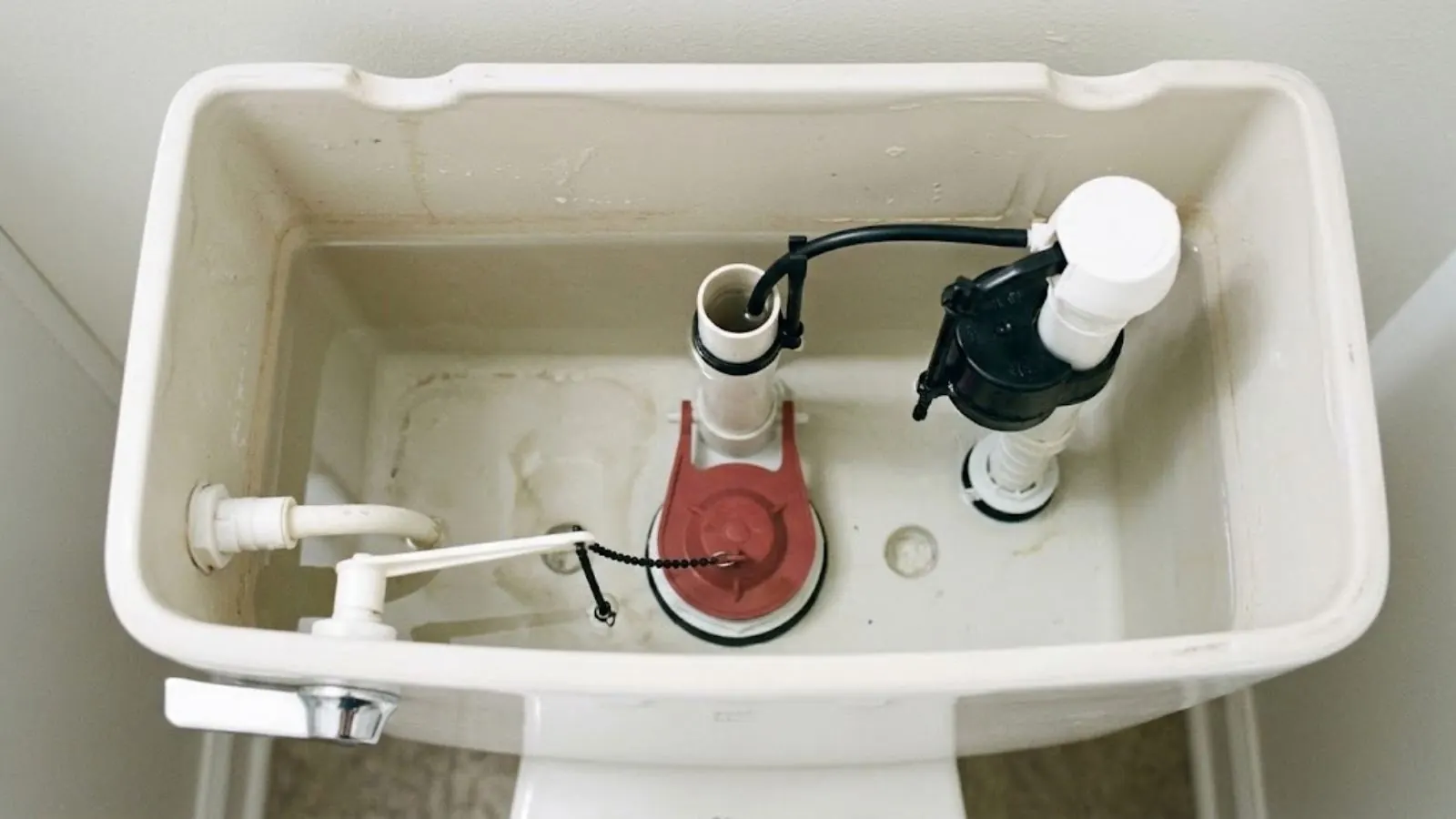
When a toilet problem is an emergency
A toilet that is overflowing, leaking onto the floor or backing up with other fixtures is urgent. Close the shutoff valve behind the toilet. If the valve is stuck, lift the float in the tank to stop the fill and close the main water valve. Mop up water quickly, because moisture soaks into subfloors and seeps through ceilings below.
If the toilet overflows again after plunging, or water appears in a tub or floor drain, the blockage is deeper. Stop using water and call the 24/7 line.
Before the plumber arrives
A few quick steps limit the damage.
- Close the shutoff valve behind the toilet, turning it clockwise.
- Lift the tank float or close the main if the valve will not close.
- Use towels to keep water off subfloors and carpet.
- Do not flush again until the problem is solved.
Leaks at the base and the flange
Water around the base of a toilet usually means a failed wax ring or a damaged flange, the ring that anchors the toilet to the floor drain. A toilet that rocks, a floor that feels soft or a bad smell after flushing all point to the same area.
A flange that is cracked or sitting below the finished floor can be repaired with a flange repair ring and a new wax seal. A rotted floor around it needs more work, and the plumber tells you what they find before going further.
Running toilets and weak flushes
A toilet that runs is wasting water. The usual culprits are a worn flapper, a fill valve that does not shut off or a chain that is too long. They are inexpensive parts and a quick repair, and fixing them keeps the water bill down.
A weak flush has several causes: clogged rim jets, low tank water level or a partial clog in the trap or drain. If the toilet is older and was never a good performer, replacement with a modern high-efficiency model solves the problem for good.
| Problem | Typical cause | Typical fix |
|---|---|---|
| Water at the base | Failed wax ring or cracked flange | Reset with new seal or flange repair |
| Runs constantly | Worn flapper or fill valve | Replace parts |
| Rocks on the floor | Loose bolts or a flange below the floor | Reset and shim or repair flange |
| Weak flush | Clogged jets or partial clog | Clear jets, cable the trap |
| Tank sweats or leaks | Condensation or failed tank bolts | Replace gasket and bolts |
Toilet installation and replacement
A new toilet is a good move when the old one is cracked, leaks repeatedly or flushes poorly. The plumber removes the old unit, checks the flange and the shutoff valve, sets a new wax seal and connects the new toilet. A new supply line and shutoff valve are inexpensive extras that prevent future leaks.
Rough-in distance, the gap from the wall to the center of the drain, determines which models fit. The plumber measures it before ordering. The related faucet repair page covers the other fixtures in the bathroom.
Why older West Linn bathrooms leak at the toilet
A city survey of the Bolton neighborhood found that 250 of the 418 older properties recorded were built in the 1950s and 1960s. Bathrooms in those homes have often been updated over the decades, and each update can leave a toilet set on a flange that was never lowered or raised to match new flooring.
Tile or vinyl added over an old floor can raise the floor above the flange, which leaves the wax seal without enough compression. A flange extension or repair ring fixes it, and it is a common repair on older homes in Bolton, Willamette and Sunset.
Source type: City of West Linn Bolton historic resource survey
What affects the cost of toilet repair
- Type of repairReplacing a flapper is minor. Resetting a toilet on a repaired flange costs more.
- Floor conditionRot in the subfloor adds to the scope.
- Toilet modelNew toilets range from basic to premium, and the rough-in matters.
- AccessSecond-floor bathrooms take more care with water protection.
- Time of dayEmergency dispatch costs differently from a scheduled visit.
A sudden overflow that damages the floor may be a covered loss, but the repair of a worn part is usually not. Photograph the damage first. Want your real number? Call (503) 974-3329.
Work on toilet repair & installation falls under the Oregon Plumbing Specialty Code, the state plumbing code, which is based on the Uniform Plumbing Code (UPC). Which rules apply to your job, and whether a permit is needed, is a question for the plumber and for the City of West Linn Building Division at 503-656-4211.
Toilet overflowing or leaking? Call the 24/7 line.
Call (503) 974-3329If a toilet backs up along with other drains, see drain cleaning for the main line side. Homeowners in Gladstone and Lake Oswego use the same service.
Common questions about toilet repair & installation in West Linn
Yes. An overflowing toilet is an emergency, so the line is open 24/7. Close the shutoff valve and call (503) 974-3329.
The usual cause is a failed wax ring or a damaged flange. Stop using the toilet and call, because the water can soak the subfloor.
Yes. A worn flapper or fill valve is the usual cause, and it is a quick repair that saves water.
Repair is fine for a worn part on a good toilet. A cracked bowl, repeated leaks or a poor flush are good reasons to replace it.
Yes. The plumber checks the flange and shutoff valve, sets a new seal and tests for leaks.
It is a metal or plastic ring that reinforces a cracked or damaged flange so the toilet can be set securely again.
Toilet overflowing or leaking in West Linn? Call any hour.
Call (503) 974-3329