
Is the leak an emergency? Check the meter first
Turn off every tap and appliance, then look at the meter. If the small low-flow dial keeps turning, water is leaving the system somewhere. Close the main shutoff and watch again. If the dial stops, the leak is inside the house. If it keeps turning with the main closed, the leak is between the meter and the shutoff.
Active water in a ceiling, wall or under a floor is an emergency. Shut the main, switch off power to the wet area at the breaker, and call. Slow leaks can wait for a scheduled visit, but they never get cheaper.
Water meter running or a high water bill
A creeping bill with no change in habits is the classic sign of a hidden leak. A running toilet flapper can waste a surprising amount, and so can a leaking irrigation valve. The plumber starts with the simple, cheap tests: toilet dye, a meter check, a pressure test on the house line.
If those are clean, the search moves to the supply line between the meter and the house, then to slab and wall piping. The process is a narrowing exercise, and each test rules out part of the system.
| What you see | Where to look first | Urgency |
|---|---|---|
| Meter runs with everything off | Meter to house line, toilets, irrigation | Same day |
| Warm spot on the floor | Hot water line under the slab | Urgent |
| Ceiling stain or bubbling paint | Supply or drain above, or the roof | Urgent if growing |
| Wet crawlspace or musty smell | Supply or drain lines under the house | Same day |
| Soggy patch in the yard | Buried service line or irrigation | Same day |
Slab leaks
A slab leak is a leak in a pipe running under or through a concrete slab. The signs are a warm floor, the sound of running water with nothing on, a sudden bill increase and damp carpet at a wall. Hot lines leak more often because heat and expansion stress the pipe.
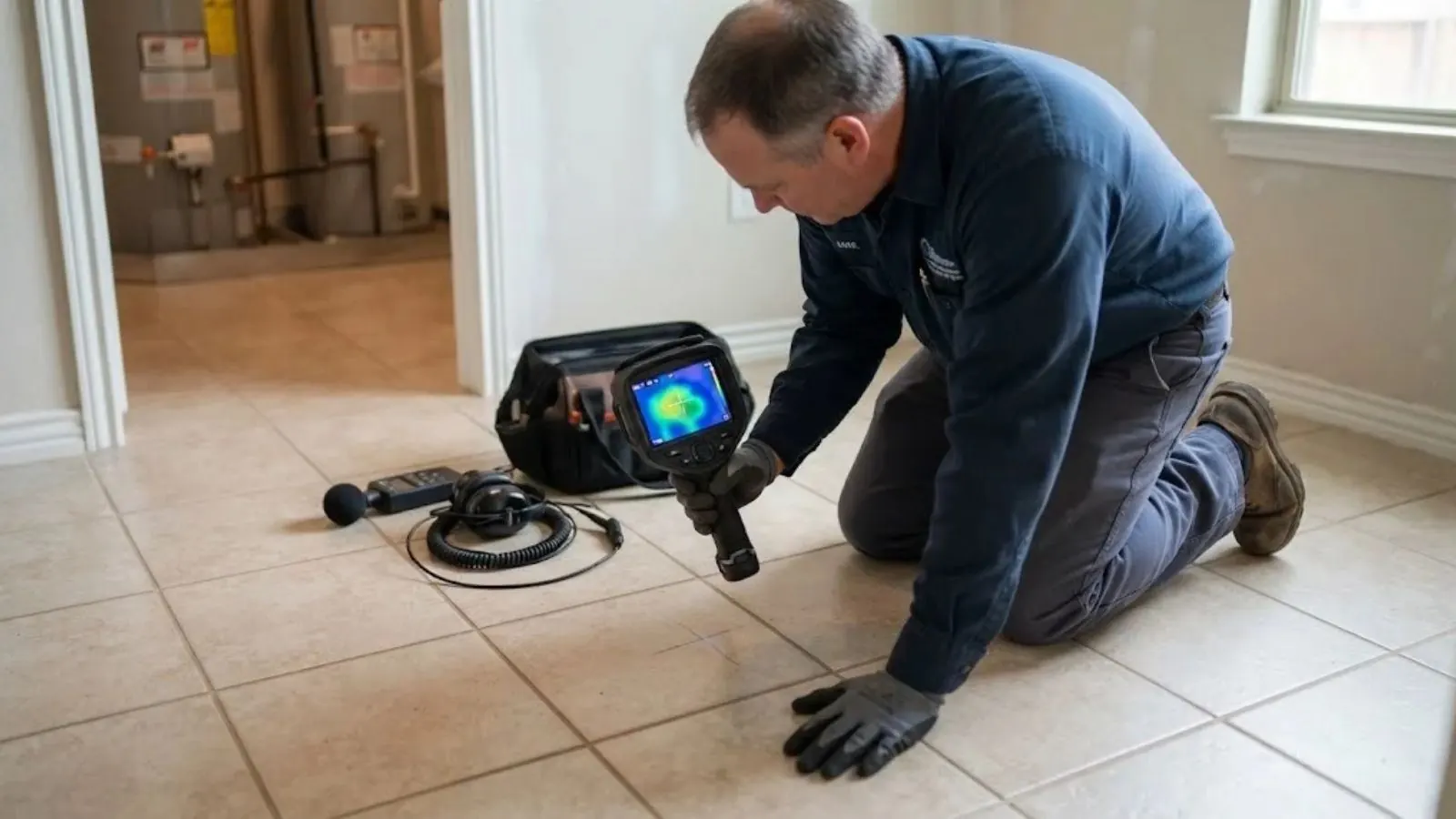
Finding the exact spot matters because the repair is often a spot dig or a reroute around the damaged section, not a full floor removal. Methods include acoustic listening, pressure isolation of each line and, for hot lines, thermal imaging. Ask the dispatcher which method your technician will use.
Ceiling, wall, crawlspace and buried line leaks
A ceiling leak is not always a roof leak. A bathroom above a stain may have a failed shower pan, tub overflow or supply line. A wall leak can stay hidden for months until paint bubbles. In a crawlspace, damp insulation, drooping duct wrap and a musty smell are the signs.
Buried service line leaks show up as wet ground without rain, a drop in pressure or a meter that runs after the house is shut off. Irrigation leaks are a frequent hidden cause of high bills. When one is found, the repair may touch the burst pipe repair side of the business, and we describe the options before the work.
Hills, pressure and the meter at the street in West Linn
West Linn spans a lot of elevation. The Sunset neighborhood climbs to about 620 feet near Summit and Knox streets, while the Willamette district sits down near the river. Homes at the low end of a hillside can run higher pressure than homes at the top, and sustained high pressure shortens the life of supply lines and fittings.
If you have repeat leaks, ask the plumber to test static pressure at a hose bib and check the pressure reducing valve. The city also publishes a lead service line inventory, which shows what your service line is made of, a useful step before any dig.
Source type: City of West Linn Sunset neighborhood historic survey and the 2024 water quality report
Irrigation, sprinkler and pool or spa leaks
A soggy patch in the lawn, a sprinkler zone with weak spray or a meter that keeps moving while the house is off can point to a leak in the irrigation line. Close the irrigation supply and read the meter again. If the dial stops, the leak is on that branch, and the plumber can locate it before any digging starts.
Pool and spa plumbing is a narrower trade. A pool that loses water faster than evaporation can explain may have a leak in the supply or return line, and a plumber can pressure test the lines that run to it. The shell and equipment are a separate matter for a pool specialist.
What affects the cost of leak detection
- Where the leak isA fixture test is quick. A slab or buried line takes more equipment and time.
- AccessibilityOpen framing and a crawlspace are easier to test than finished walls and floors.
- Number of testsEach isolated line and each method adds time.
- Repair after detectionFinding the leak is a separate cost from repairing it.
- Time of dayEmergency dispatch costs differently from a scheduled visit.
Insurance may cover sudden leaks and the resulting damage, but often not the cost of locating or repairing the pipe itself. Ask your insurer before work begins. Want your real number? Call (503) 974-3329.
Work on leak detection falls under the Oregon Plumbing Specialty Code, the state plumbing code, which is based on the Uniform Plumbing Code (UPC). Which rules apply to your job, and whether a permit is needed, is a question for the plumber and for the City of West Linn Building Division at 503-656-4211.
Hidden water somewhere in your house? Call the 24/7 leak line.
Call (503) 974-3329Leak work often leads to related jobs. A failing supply line may lead to repiping, and a leak at the water heater is covered on the water heater repair page. Neighbors in Lake Oswego and Oregon City use the same service.
Common questions about leak detection in West Linn
Yes. Active leaks cause damage by the hour, so the line is open 24/7. Close the main water valve, switch off power to the wet area and call (503) 974-3329.
Turn everything off and watch the low-flow dial. If it moves, water is leaving the system. Close the main shutoff and check again to learn whether the leak is inside the house or outside it.
Often yes. Acoustic listening, pressure isolation and thermal imaging narrow a leak to a small area, so any opening is only as large as it needs to be.
A slab leak is a leak in pipe running under or through a concrete slab. Common signs are a warm floor, running water sounds with nothing on and a higher bill.
Yes. Irrigation valves and lines are a common cause of high bills, and we include them in the search when the meter keeps running.
Yes. Shops, offices and rentals use the same line, and the commercial plumbing page covers after-hours work for businesses.
Meter running or water showing in a wall? Call any hour.
Call (503) 974-3329