
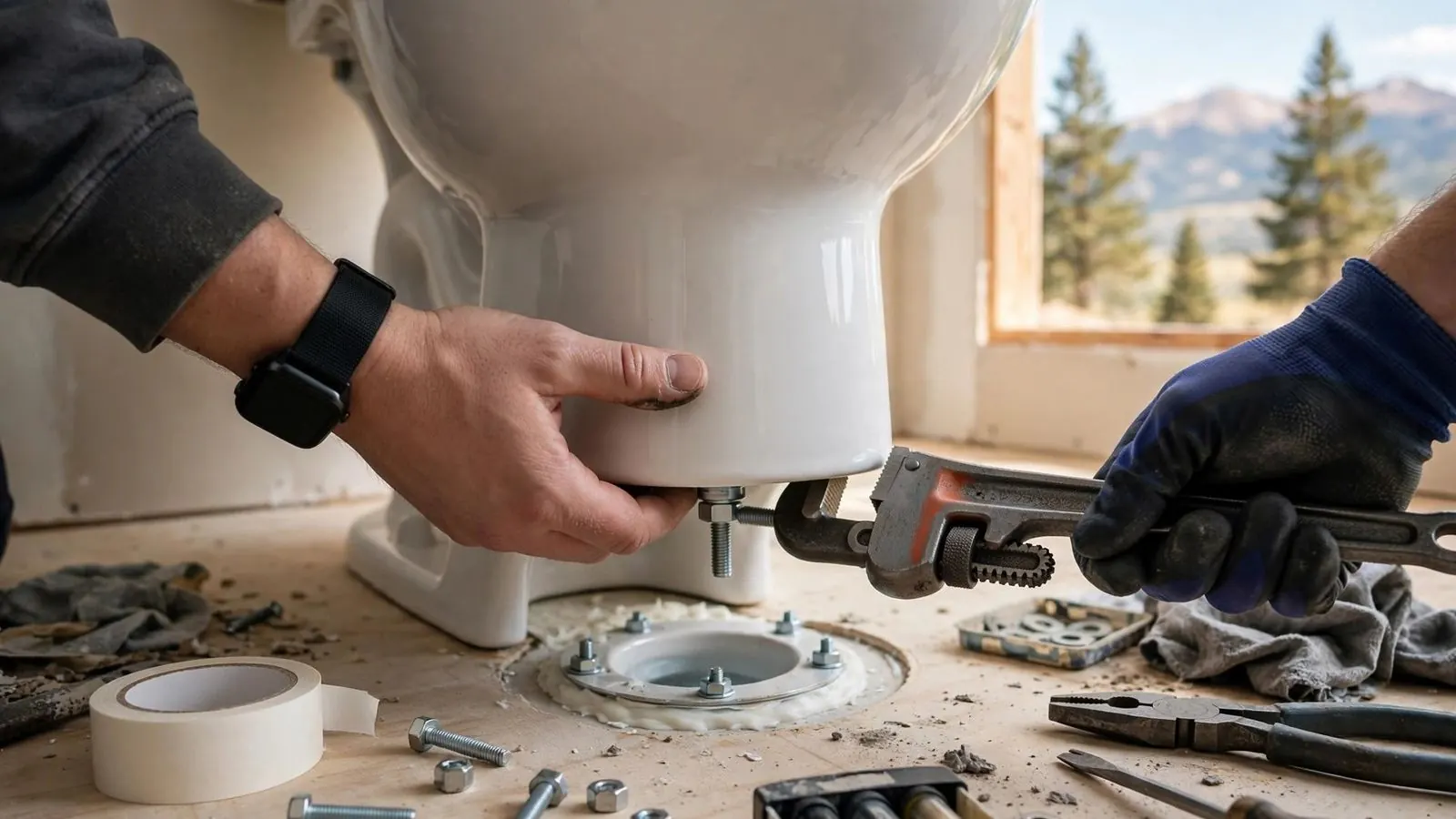
What the flange does and how it fails
The flange sits on top of the drain pipe and is screwed to the floor. The toilet bolts to it, and a wax or rubber seal between the two keeps sewage and gas from escaping. If the flange cracks, rusts or comes loose from the pipe, the toilet loses its anchor and the seal fails.
The common causes are age, a toilet that has been rocked for years, a floor that has settled and moisture that has rotted the subfloor around the ring. Cast iron flanges rust, plastic ones crack, and brass ones can bend.
Signs the flange is the problem, not just the wax ring
Signs of a damaged flange
A new wax ring alone will not fix these.
- The toilet rocks even after the bolts are tightened.
- The bolt slots are broken or the bolts will not hold.
- You see a crack or a rusted, crumbling ring when the toilet is lifted.
- The flange sits below the finished floor so the seal cannot compress.
- The subfloor around the flange is soft or stained.
A leak at the base, a sewer smell or a toilet that moves are all possible wax ring failures too. The plumber lifts the toilet and looks at the flange before deciding. If the flange is intact and level, a new seal fixes the leak.
How a repair ring is installed
The toilet is shut off, drained and lifted away. The old wax is scraped clean and the flange is checked for cracks and level. A stainless steel repair ring is then placed over the damaged area and screwed through to a solid floor, which gives the toilet bolts a new, strong seat.
The ring only helps when the pipe below is solid and the subfloor holds screws. If the pipe is cracked or the floor is rotted, the repair needs to go deeper.
| Condition | What works | What to expect |
|---|---|---|
| Cracked flange, solid floor | Repair ring | Quick repair, toilet reset with new seal |
| Flange rusted off the pipe | Replace flange | May need pipe work below |
| Soft or rotted subfloor | Repair floor, then flange | Larger job, may need other trades |
| Flange too low for the new floor | Spacer or extender | Tile or new flooring changes the height |
Why a rocking toilet should not wait
A toilet that moves puts stress on the seal each time someone sits down, and a slow leak can run under flooring for months. By the time you smell it or see a stain, the subfloor may be soaked. Rot spreads, and the repair grows from a ring to a floor job.
If you see water at the base, stop using the toilet and close the stop valve behind it. A leak that is inside a wall or ceiling below is an emergency, since water follows pipes to places you cannot see. Our toilet repair page explains what happens when a plumber is called.
What West Linn says about toilets and cross-connections
The City of West Linn's water quality report warns that copper stains on fixtures can come from leaky faucets or faulty toilet flush valves, and that improperly installed toilet valves can cause cross-connection contamination. It recommends that you check your plumbing if you see stains.
For you, that means a toilet that runs, seeps or sits off its seat is not only a nuisance. It can point to a valve or fill problem that the city flags for good reason. If you are replacing a toilet or a fill valve, ask the plumber to confirm the valve is installed so it cannot siphon back. The report is the city's own published document, and the Public Works office lists a contact in it.
Source type: City of West Linn annual water quality report (2024 data)
What a repair costs and what changes it
A repair ring is one of the less expensive toilet fixes, but the price rises when the floor needs work. The factors are the flange material, the floor condition, whether the toilet has to be replaced and how much access you have. Ask for the price before work starts, and ask what happens if the floor is rotten once the toilet is out.
If the toilet is an older model, resetting it with a new seal is a good time to replace the fill valve and supply line while it is off the floor.
If you live across the river or up Highway 43
Homeowners in Oregon City and Lake Oswego ask the same question, especially in houses from the mid-century decades, where the original cast iron flange has had a long time to rust. The advice is the same on either side of the river: lift the toilet, look at the flange and decide after you can see it.
If you have replaced flooring and the toilet now sits higher or lower than before, tell the plumber. The flange height relative to the finished floor decides whether a standard seal will work or a spacer is needed.
Plumbing work in Oregon follows the Oregon Plumbing Specialty Code, which is based on the Uniform Plumbing Code (UPC). This guide is general information. For your own house, ask the plumber which rules apply and check permits with the City of West Linn Building Division.
West Linn questions about toilet flanges
Sometimes. If the flange sits too low, a spacer or extender may be needed so the seal can compress. The plumber checks the height.
The flange may be cracked or the floor may be soft. Over-tightening can crack the base, so stop and check the flange.
A straightforward repair ring job is usually done in one visit. A rotten subfloor adds time.
Permit rules vary, so ask the City of West Linn Building Division at 503-656-4211. A simple repair may not need one, and the plumber can tell you what applies.
It is if water is running onto the floor or through a ceiling. Close the stop valve and call. A slow seep can wait for a scheduled visit.
Toilet rocking or leaking at the base? Call to check the flange.
Call (503) 974-3329