
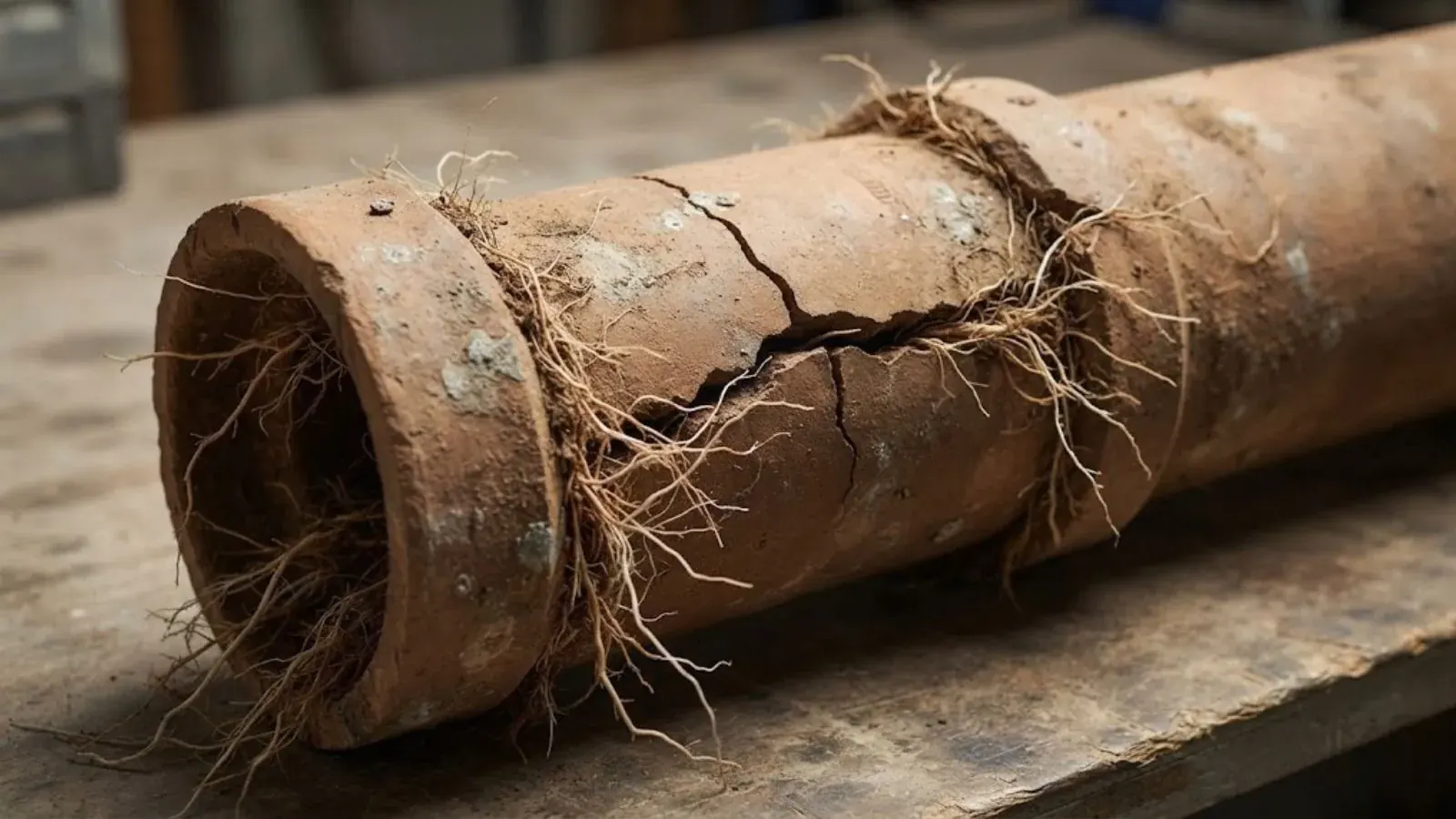
How roots get in
A sewer pipe is a small, steady source of water and warmth, and roots grow toward it. A joint that has shifted, a hairline crack or an old clay pipe with loose seams gives them an opening. Roots enter as fine hairs, then thicken inside the pipe.
The result is a root mass that narrows the line. Toilet paper and grease snag on it, and the line clogs again and again.
Signs roots may be in your line
A pattern matters more than one event.
- Slow drains that return a few weeks after each clearing.
- Gurgling in toilets when other fixtures drain.
- A backup in the lowest drain after heavy rain.
- Mature trees or large shrubs near the lateral.
- An older house with clay or cast iron pipe.
Clearing the roots
The plumber feeds a cable with a cutting head down the line and chops the root mass. A hydro jetter follows to scour the pipe and flush out debris. Both clear the line, but they do not repair the entry point.
Roots grow back, sometimes within months. A camera after clearing shows how many entry points there are and whether the pipe is sound.
| Option | What it does | Trade off |
|---|---|---|
| Scheduled cleaning | Keeps roots cut back | Ongoing cost, no repair |
| Spot repair | Replaces a cracked section | Digging, leaves other joints |
| Pipe lining | Seals joints and cracks from inside | Needs sound pipe |
| Replacement | New pipe with tight joints | Most work, longest lasting |
Preventing a repeat
The best prevention is a tight pipe. Roots cannot enter a sealed joint. Lining or replacement removes the opening. Where that is not planned, a cleaning every one to two years, timed before the growing season, keeps small roots from becoming a mass.
Avoid planting willows, maples and other thirsty trees near the lateral. Some root killers sold for toilets can harm pipes and the environment, so ask the plumber before using one.
Roots, the city main and who to call
The City of West Linn's sanitary sewer page says the Sewer Branch works with the Stormwater Branch as part of the Environmental Service Division. For backups, the city sewer FAQ lists the Public Works Operations Division at 503-722-5500 during business hours and LOCOM non-emergency dispatch at 503-635-0238 after hours.
Roots can enter the city main as well as your lateral. If neighbors on your street see backups at the same time, the city's pipe may be involved, and a report to Public Works helps. The city's history page shows the population rising from 2,923 in 1960 to over 7,000 in 1970, so many older laterals were laid in that growth and are now sixty or more years old.
Source type: City of West Linn sanitary sewer page, sewer FAQ and history page
Repair or replace: what the camera decides
If the camera shows a few entry points on sound pipe, lining or spot repair may solve the problem. If it shows a collapsed or severely offset pipe, replacement is the lasting answer. The plumber explains the options and the price of each, and you decide.
Our sewer line repair page lists the repair routes, and sewer inspection covers the camera. A repair that needs digging in a street or right of way may need a permit, so ask the City of West Linn Building Division at 503-656-4211.
Nearby towns we serve
Homes in Oregon City and Gladstone with mature trees see the same root pattern. The sequence is the same: clear the line, camera it, then choose the repair.
What to ask the plumber
Ask where on the line the roots were found and how far from the house. Ask whether the pipe is clay, cast iron or plastic and whether the camera showed a sag or an offset. Ask for the recording and for written options with prices.
A good answer includes a recommendation and a reason. If the plumber suggests digging, ask why lining or spot repair would not work. If lining is suggested, ask whether the pipe is sound enough for it. The questions take a few minutes and often save a repeat visit.
Finally, ask what to watch for. A good plumber will tell you which symptoms mean the roots are back, such as a gurgle or a slow tub, and how soon to call. Write the date of the visit on the cleanout cap with a marker, so you can see how long the line stayed clear.
Plumbing work in Oregon follows the Oregon Plumbing Specialty Code, which is based on the Uniform Plumbing Code (UPC). This guide is general information. For your own house, ask the plumber which rules apply and check permits with the City of West Linn Building Division.
West Linn questions on this topic
Roots enter joints and cracks and widen them. They rarely break a sound pipe but they can worsen an existing crack.
A line with known roots may need cleaning every one to two years. A camera helps set the schedule.
They can slow regrowth but do not repair the pipe. Ask a plumber before using one.
It depends on where the pipe and tree are. Ask City of West Linn Public Works Operations at 503-722-5500.
Lining seals joints and cracks from inside, so roots cannot enter, if the pipe is otherwise sound.
Repeat sewer backups from roots? Call to schedule a camera look.
Call (503) 974-3329